
Advice and inspiration
How to care for a hand-knotted rug in everyday use

A hand-knotted rug can tolerate everyday use better than many people expect. What harms it most is not ordinary walking, but fine dust deep in the pile, long exposure to strong sunlight, moisture, dragging furniture, an unsuitable underlay and well-meant but aggressive home cleaning.
Good care is therefore not complicated. Remove soil before it is ground into the foundation, respond quickly and calmly to accidents, avoid saturating the rug and inspect the reverse, sides and fringe regularly. With silk, antiques, older repairs or unknown stains, it is safer to ask before trying something.
Vacuum according to use, not a fixed calendar
A living-room rug crossed every day needs more attention than a rug beneath a table in a quiet study. Dust does not have to be visible on the surface to work down to the base of the pile, where it can act like a fine abrasive underfoot.
Use a smooth suction-only nozzle. A rotating brush, beater bar or excessive pull can catch pile, loose yarns or fringe. Move slowly in the direction of the pile, without pressure and without rubbing one area for too long. Treat fringe very cautiously by hand, or leave it out of routine vacuuming.
From time to time, lift the rug and vacuum the underlay and floor as well. Fine dust, crumbs and early signs of pests often collect in these undisturbed places.
Gentleness matters more than force
It is tempting to set a vacuum to maximum power. With a hand-knotted rug, patience is usually safer: low to moderate suction, slow movement and more regular care. If long yarn ends appear while vacuuming, stop and inspect the area. Never pull them.
A fragile, silk or very old rug is better cleaned through a protective screen or by a specialist. The same applies if the sides are loose, the fringe is breaking down or repairs are visible on the reverse.
Limit harsh sunlight and rotate the rug
Light damage is cumulative for textiles. Many hours of direct sun on the same area can gradually fade dyes and dry fibres. Curtains, blinds, thoughtful furniture placement or window UV protection can reduce the load.
Rotate the rug 180 degrees every few months. Traffic, light and furniture pressure will then be distributed more evenly. If one area lies in a doorway route or beside a window, inspect it more often than quiet edges.
Use a suitable underlay
A good non-slip underlay reduces movement, cushions pressure and protects both rug and floor. It must suit your floor type and should not become sticky or crumbly. Adhesive tapes, old rubber mesh and cheap pads that harden with age can create a new problem instead of solving one.
Remove and inspect the underlay periodically. Replace it if it feels tacky, smells, sheds powder or breaks apart. Under a large rug, the pad should support the area evenly rather than creating ridges under the pile.
Do not drag furniture across the rug
Lift heavy furniture instead of pulling it. A table or cabinet leg can break fibres, catch an edge or leave a permanent compression mark. Use broad smooth cups beneath heavy legs and move them slightly from time to time.
Be cautious with chair castors. Repeated movement along the same path can damage even a good wool rug. Fine silk and older rugs do not belong under that kind of traffic.
What to do when liquid spills
Act at once, but stay calm. Lift solid material carefully with a spoon, working from the edge towards the centre. Absorb liquid with a clean white cotton cloth or an undyed paper towel. Place the cloth on the spill and press from above. Do not rub, brush or flood the area with water.
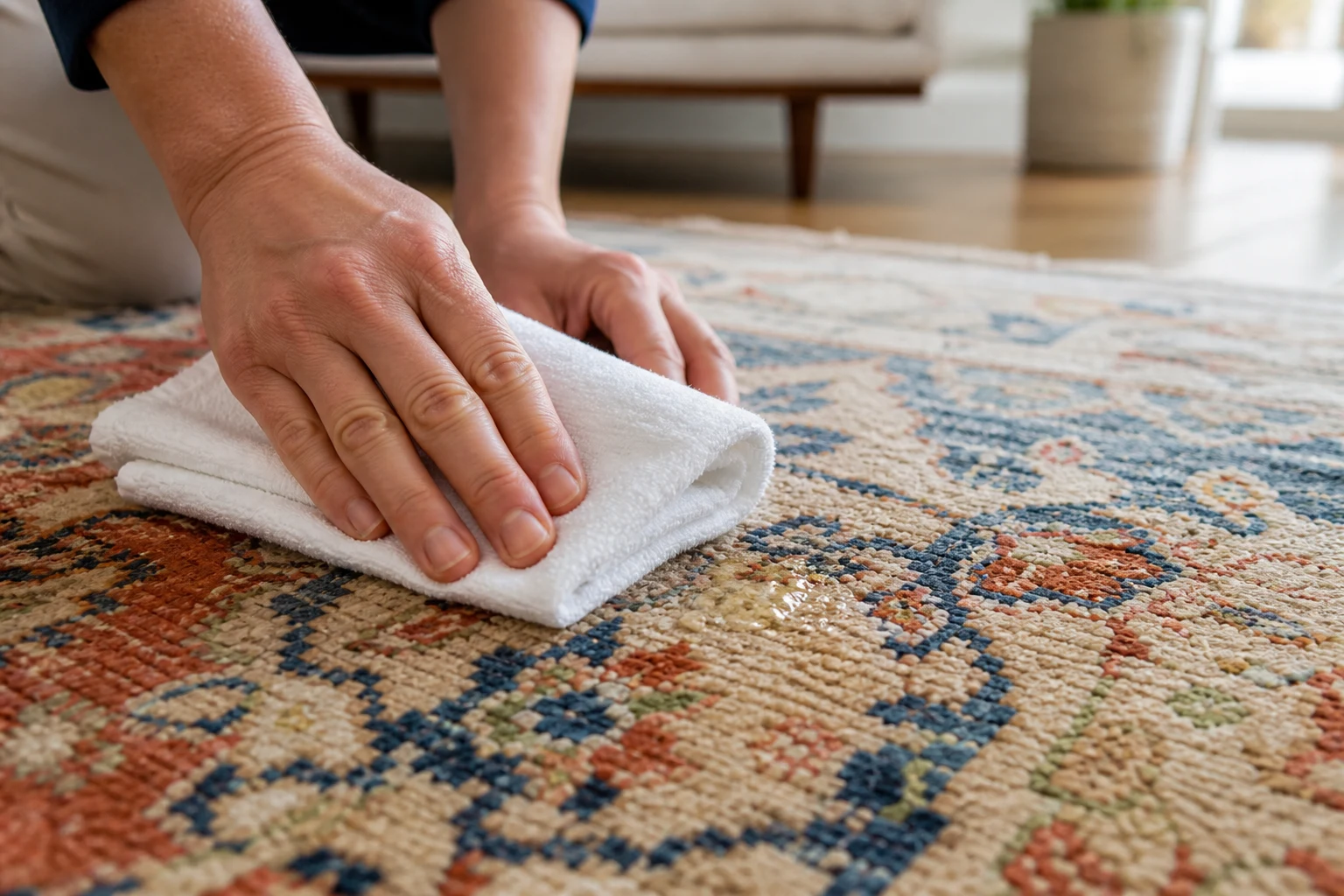
Blot a fresh spill with a clean white cloth. Rubbing can drive the mark deeper and damage the pile.
For coffee, wine, grease, ink, pet urine or an unknown stain, do not improvise. Contact a cleaner who specialises in hand-knotted rugs and explain exactly what happened. General carpet sprays, steam, vinegar, baking soda, bleach and foam cleaners can alter colour and leave residues in the fibres.
Moisture is a bigger problem than a brief accident
A small spill that is absorbed quickly need not be a disaster. Prolonged moisture is different. A wet rug left on the floor can develop odour, mould or dye migration. If a leak or flooding soaks the rug, do not fold it or roll it tightly while wet.
Separate it from the wet floor, create air movement without direct heat and contact a specialist promptly. Hair dryers, radiators and harsh sun can cause distortion and uneven drying.
Choose professional cleaning according to the rug
There is no universal interval after which every hand-knotted rug must be washed. It depends on material, traffic, household dust, pets, dye stability and whether soil has reached the foundation.
A good specialist cleaner first checks fibre, dye stability, repairs and edge condition. They should explain the method, drying process and risks. A home extractor or steam cleaner is not a safe substitute for professional hand-knotted rug washing.
Inspect fringe, sides and reverse
During routine care, look where visitors do not: the reverse, sides and ends. Watch for loose side binding, fringe beginning to unravel, local pile loss, small holes, larvae, cases or fine webbing. A small problem is usually easier to repair than an opening edge or larger pest damage.
If you store other wool textiles at home, inspect around the rug too: beneath furniture, along skirting boards and in dark quiet corners. Clothes moths and carpet beetles like dusty, undisturbed places.
How to store a rug when not in use
Store a rug only when clean and completely dry. Do not fold it into sharp creases; rolling loosely around a wide rigid tube is better. The cover should be breathable, such as cotton, not airtight plastic wrapped around damp textile.
The roll should lie horizontally and be supported along its full length. Avoid damp basements, hot attics and places with rapid temperature changes. Do not place heavy objects on a stored rug.
A simple care plan
| When | What to do | What to avoid |
|---|---|---|
| As traffic requires | Vacuum gently in the pile direction | Rotating brush and fringe vacuuming |
| After a spill | Blot with a clean white cloth | Rubbing, steam and household chemicals |
| Every few months | Rotate the rug and check light exposure | Leaving one area under constant stress |
| Several times a year | Inspect reverse, underlay, sides and pests | Ignoring small changes to fringe and edges |
| When soil is visible | Discuss specialist cleaning | Home extractor or steam mop |
A short list of things not to do
- do not use a rotating brush on fine pile or fringe,
- do not cut or pull loose yarns,
- do not scrub stains with a brush,
- do not flood the rug with water,
- do not use general chemicals without knowing the material,
- do not dry the rug with harsh heat,
- do not store it long-term in sharp folds.
A hand-knotted rug lasts longest when it is treated as a good textile, not as washable flooring. Regular gentle care, a fast response to accidents and timely repairs are better than one dramatic intervention.