
Advice and inspiration
Maintenance and cleaning of hand-knotted carpets

Caring for a hand-knotted rug is not complicated, but it should always be gentle. Regular low-suction vacuuming, protection from prolonged sunlight and damp, and a calm response to accidents usually do more good than frequent intensive treatment. Deep cleaning is a separate discipline: water, temperature, cleaning agents and drying must suit the fibres, dyes, construction and present condition of the individual rug.
There is therefore no universal home recipe that is equally safe for a Persian wool rug, a fine silk piece and an older rug with repairs. Before doing anything, identify as much as possible about the pile, warp and weft and inspect the reverse, sides and fringe. If fibres are brittle, knots or edges are coming loose, colours have bled before, or the rug is particularly old, stop and seek specialist advice.
First reduce the soil reaching the rug
Sand and fine dust are more than a cosmetic problem. Foot traffic works particles between the fibres, where they behave like a mild abrasive. A good entrance mat, a clean floor beneath the rug, a suitable underlay and prompt removal of loose dirt all help prevent it from settling deep in the pile.
- Avoid outdoor shoes in the room where practical, especially during wet or salty winter weather.
- Rotate the rug 180 degrees from time to time according to its light and traffic pattern so that exposure remains more even.
- Lift furniture rather than dragging it. Use suitable cups beneath narrow feet to spread concentrated pressure.
- Limit prolonged direct sun with blinds, curtains or appropriate window protection, paying attention to a sharp boundary between sun and shade.
- Inspect beneath the rug periodically. Damp, crumbs and insect activity often begin out of sight.
How to vacuum a hand-knotted rug safely
First check that the rug is stable, with no loose yarn, failing side, cracking foundation or unusually fragile pile. Use low to moderate suction and a plain smooth nozzle with no powered brush or beater bar. Work slowly in the direction of the pile without pressing the head hard into the surface.
Do not vacuum fringe in the same way as the field. It can be drawn into the mechanism and gradually loosened. Keep clear of ends and vulnerable edges or use even lower suction. Conservators may use a protective screen and carefully controlled suction on old, silk or weakened textiles; unless you have the right equipment and experience, ask a specialist first.
Occasionally move or carefully turn the rug so that the underlay and floor can also be vacuumed. Clean the reverse only if its condition allows, again without a powered brush. Do not beat the rug over a railing or strike it forcefully: the shock places unnecessary stress on the foundation, sides and knots.
A spill: the first minutes matter
- Stop it spreading. Lift solid material carefully with a spoon or blunt edge without forcing it into the pile.
- Blot; never scrub. Press a clean white absorbent cotton cloth or plain paper towel onto the area. Work from the outer edge towards the centre.
- Watch for colour. If colour from the rug appears on the white cloth, stop immediately.
- Do not add more liquid. Without professional guidance, avoid carpet foam, laundry detergent, vinegar, baking soda, alcohol, solvent and general-purpose stain remover.
- Call early when the risk is higher. For oil, coffee, wine, urine, an unknown substance, a large wet area, silk or an old rug, absorb as much as possible and consult a rug specialist about the next step.
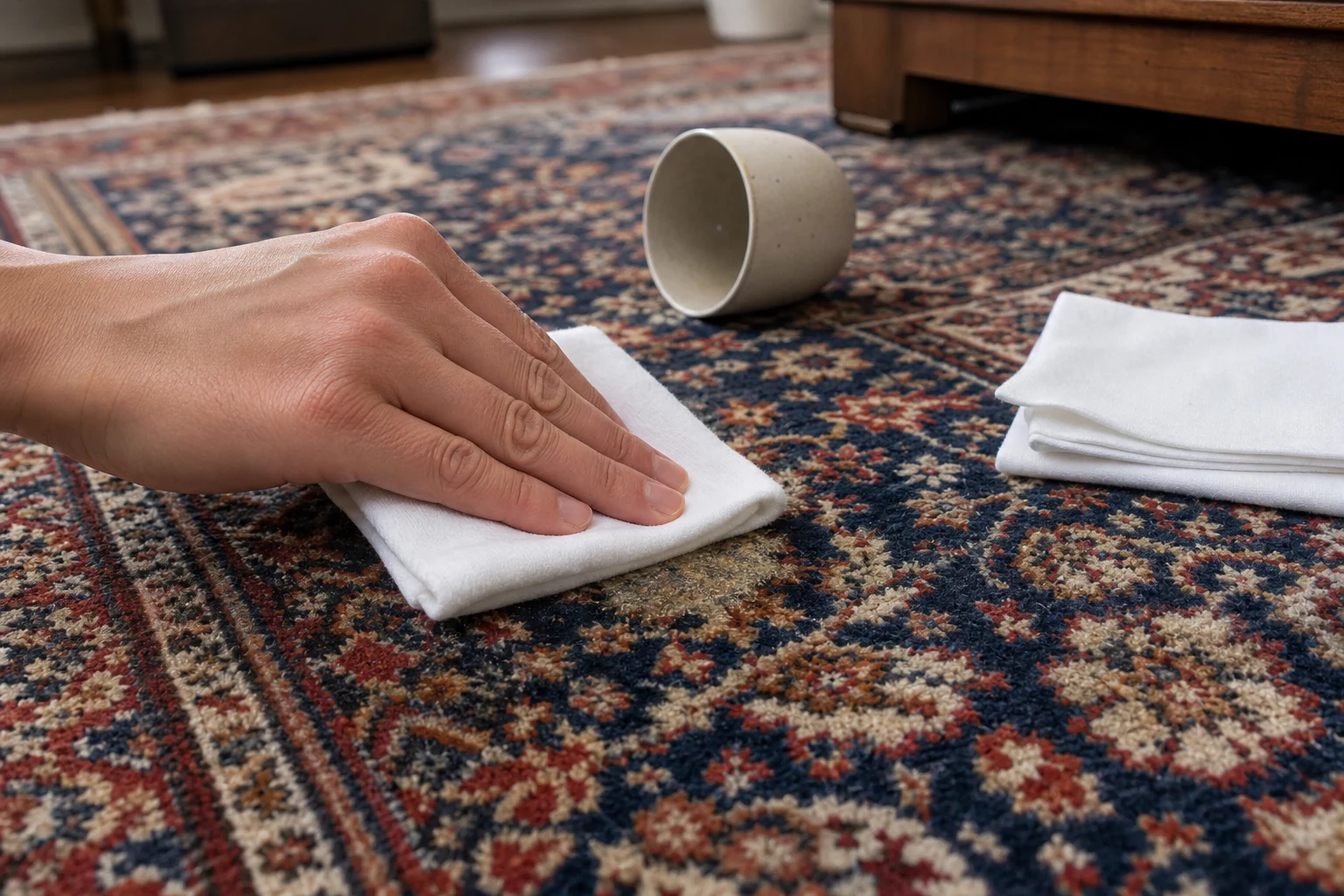
Use a clean white cloth to absorb liquid. Rubbing drives it further into the structure, spreads the stain and can distort or felt the pile.
Why even plain water is not always harmless
Water can mobilise an unstable dye, leave a tide mark, change warp tension or carry soil deeper into the rug. On some constructions, uneven wetting can lead to rippling or shrinkage. The risk lies not only in wetting but also in slow, uneven drying. A saturated rug also becomes extremely heavy, and lifting it carelessly can damage its foundation.
Do not place a wet patch beside a radiator, use a hot hairdryer or expose it to fierce sunlight. Heat can cause irreversible changes to fibres and colours. Treat widespread saturation from a leak or flood as an urgent specialist matter, and never fold or roll a damp rug.
When ordinary vacuuming is no longer enough
Professional cleaning should not follow the same fixed calendar for every home. Traffic, dust, pets, fibre and condition all matter. Ask for an assessment when the pile still looks grey or loaded after gentle vacuuming, the rug has an odour, a stain is extensive, it has been involved in a water incident, or there are signs of mould or insects.
| Situation | Safe first response | Avoid |
|---|---|---|
| Ordinary dry dust | Gentle suction in the pile direction | Powered brushes, high suction or beating |
| Small fresh spill | Blot immediately with a clean white cloth | Rubbing, scrubbing or mixing home cleaners |
| Oil, dye, urine or unknown material | Absorb what you can and photograph the area | Experimenting with solvent or shampoo |
| Extensive wetting | Contact a specialist as soon as possible | Folding, rolling or drying with heat |
| Silk, old or damaged rug | Have the condition assessed first | Trying a wet test in a hidden corner |
| Mould or insects | Isolate it from other textiles and seek advice | Brushing spores indoors or applying an aerosol |
What a professional assessment should cover
Before cleaning, a specialist should open the rug out, examine both sides and record existing damage, repairs, stains and vulnerable edges. The materials and construction need to be identified, the foundation assessed and the response of the colours tested professionally. Only then can an appropriate process be selected, from controlled mechanical dust removal to carefully managed washing and even drying.
Ask whether the workshop has direct experience with hand-knotted wool and silk, how it documents a rug before treatment, how it manages unstable colours and how complete drying is achieved. A responsible cleaner will not promise to remove every mark at any cost. Sometimes a faint residual trace is safer than permanent loss of original pile or dye.
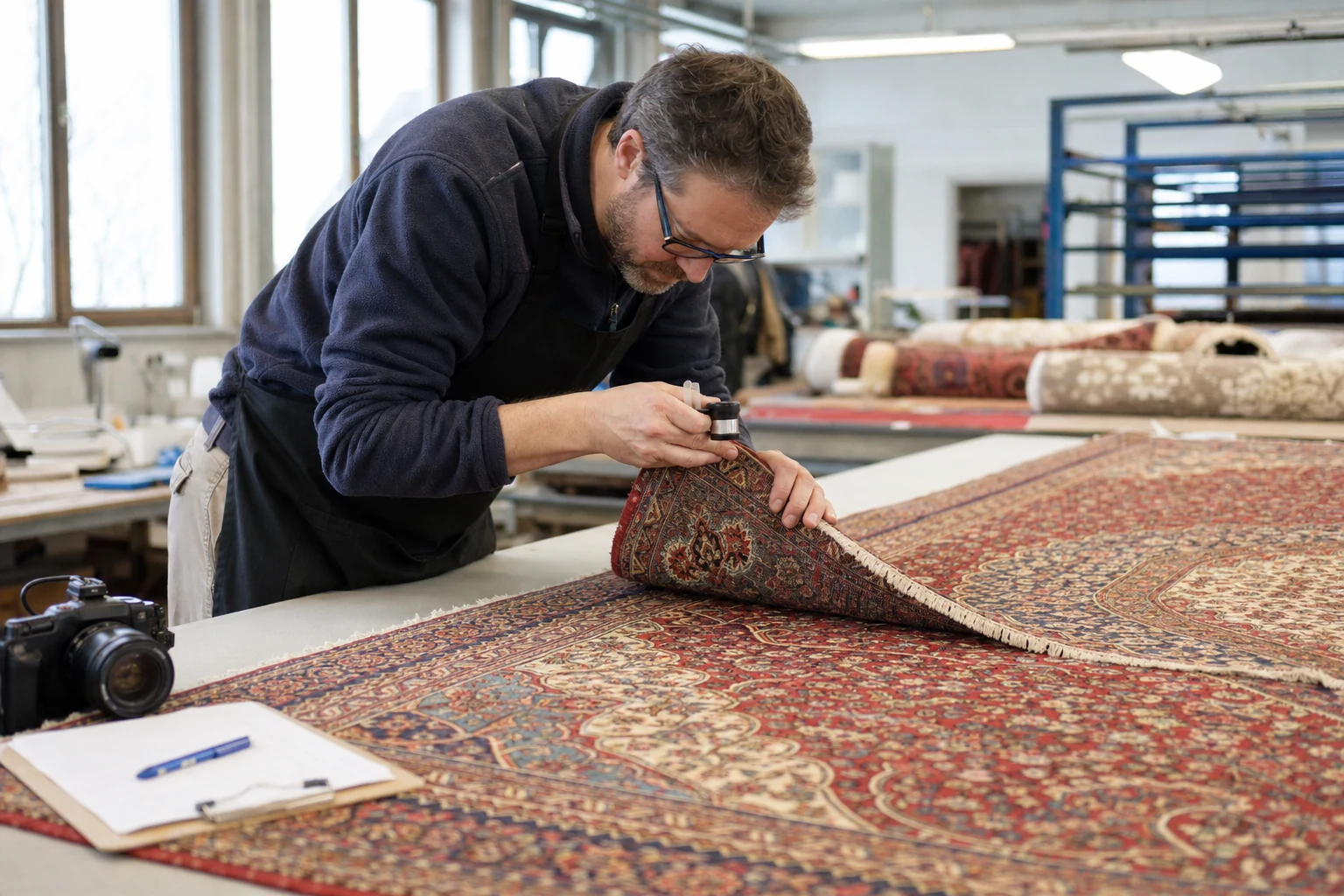
Safe cleaning starts with examination. Construction, fibres, dyes and earlier repairs determine which treatment an individual rug can tolerate.
Home methods to avoid
- a steam mop or household upholstery steam cleaner,
- general carpet shampoo and foam left in the pile,
- a pressure washer, garden hose or soaking in a bath,
- a stiff brush, rotary machine or vigorous scrubbing,
- chlorine bleach, general degreaser and improvised mixtures from the internet,
- powders that cannot be reliably removed from deep in the structure,
- hot drying, or folding and rolling while the rug is damp.
Preparing a rug for longer storage
Store a rug only when it is clean and completely dry. Sharp folds place long-term stress on the foundation, so loose rolling around a wide, clean support is preferable; ask for specialist advice on the appropriate direction and materials for a valuable or fragile piece. A protective cover should keep out dust without trapping residual moisture.
Keep the roll horizontal, raised above the floor, in a dry and stable environment away from direct light. Do not stack heavy objects on it. Inspect it periodically for odour, condensation, loose fibre, larvae or other evidence of pests. Mothballs and strongly scented products are not substitutes for cleanliness, inspection and suitable storage conditions.
A ten-minute check from time to time
- View the pile with and against the light.
- Check the sides and fringe for newly loose material.
- Lift a corner and inspect the reverse, underlay and floor.
- Look for a new stain, a damp odour or small traces of insect activity.
- Compare colour near a window with a shaded area.
- Rotate the rug when traffic or light is becoming uneven and reconsider furniture pressure points.
- Photograph a small fault and address it before it spreads.
Good maintenance does not mean repeatedly wetting a rug or keeping it free from every sign of life. It means preventing abrasive dust, excessive light and damp, responding to accidents without panic, and recognising the limit of home care. If your rug needs a deeper treatment, contact Carpeteria with clear photographs of the face, reverse and affected area so that we can recommend an appropriate next step.